
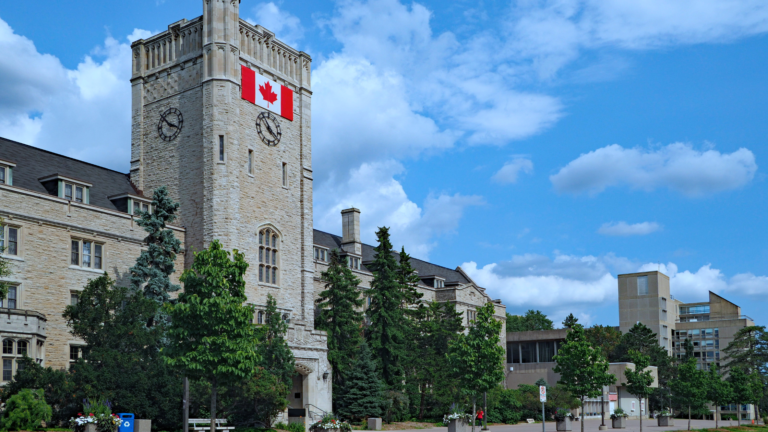
For many Indian students, Canada is seen as one of the most accessible study-abroad destinations.
Strong universities, relatively transparent admissions processes, and post-study work opportunities make it an attractive option. This often creates the assumption that admission is straightforward if academic requirements are met.
In 2026, that assumption no longer holds.
Top Canadian universities are receiving a growing number of applications from academically qualified students. As a result, admissions decisions are becoming more selective, especially for competitive programs.
The difference between acceptance and rejection is increasingly determined by alignment, preparation, and clarity, not just eligibility.
This blog outlines seven key factors that influence admission to top Canadian universities in 2026, and why each one matters more than it appears.
1. Academic Consistency Across High School
Canadian universities place a strong emphasis on consistent academic performance.
Unlike systems that focus heavily on final exam results, Canadian institutions often evaluate:
• Class 10, 11, and 12 performance
• Subject-wise consistency
• Academic progression over time
A student with stable performance across years is often viewed more favorably than one with sharp fluctuations, even if final scores are similar.
Universities want confidence that the student can handle sustained academic rigor.
2. Subject Alignment With Intended Program
Admission is not based only on the overall percentage.
Canadian universities pay close attention to whether a student’s subject choices align with their intended major.
For example:
• Engineering programs expect strong mathematics and physics
• Business programs value mathematics and analytical subjects
• Science programs require subject-specific foundations
Universities Canada provides an overview of how institutions structure programs and admission expectations, helping students understand subject alignment requirements.
Students who apply without proper subject alignment often face rejection despite strong overall scores.
3. Strength of Grade 12 Predicted Scores
Predicted scores play a crucial role in Canadian admissions, especially when final results are not yet available.
Admissions teams evaluate:
• Realistic score projections
• Alignment between past performance and predicted results
• Consistency across subjects
Unrealistically high predictions that are not supported by past performance can raise concerns.
In 2026, credibility matters just as much as performance.
4. Program Competitiveness and Seat Availability
Not all programs within a university are equally competitive.
Fields such as:
• Computer Science
• Business (especially BBA and Commerce)
• Engineering
• Health Sciences
receive significantly higher application volumes.
This means admission cutoffs can vary widely even within the same institution.
Understanding program-level competitiveness helps students:
• Set realistic expectations
• Build stronger backup options
• Apply more strategically
Students who ignore this factor often apply too narrowly and limit their chances.
5. English Language Proficiency Scores
Most Canadian universities require proof of English proficiency through tests such as IELTS or TOEFL.
However, in 2026, these scores are not just a formality.
Admissions teams use them to assess:
• Academic readiness
• Communication ability
• Ability to adapt to an English-speaking academic environment
The Government of Canada outlines study permit and language requirements for international students, offering clarity on how English proficiency impacts admissions and visa processes.
Students who meet only the minimum score requirements may still be at a disadvantage in competitive programs.
6. Supplementary Applications and Essays (Where Required)
While many Canadian universities are academically focused, some programs require additional components such as:
• Personal statements
• Supplemental essays
• Video interviews
These are especially common in competitive business and selective programs.
These components help universities assess:
• Motivation
• Communication skills
• Fit with the program
Students who treat these as optional or secondary often weaken otherwise strong applications.
7. Overall Application Strategy and University Selection
Perhaps the most overlooked factor is how students build their overall application strategy.
Many applicants:
• Apply only to highly competitive universities
• Ignore program fit
• Do not diversify their choices
A strong application strategy includes:
• A mix of ambitious, realistic, and safe options
• Program-specific research
• Alignment between profile and university expectations
In 2026, strategic planning often matters as much as academic performance.
Why These Factors Matter More in 2026
Canadian universities are not becoming harder to enter because standards are rising dramatically.
They are becoming more competitive because more students meet those standards.
This shifts the focus from eligibility to differentiation.
Students who understand how admissions decisions are made can prepare more effectively. Those who rely on assumptions often realise too late where they fell short.
A Thought for Students and Parents
Applying to Canadian universities is often perceived as low-risk.
In reality, the process requires just as much planning and clarity as other destinations.
Students who approach applications thoughtfully make better decisions, avoid unnecessary stress, and improve their chances of admission.
For parents, encouraging early research and realistic planning often leads to stronger outcomes than focusing only on final scores.

Final Takeaway
In 2026, admission to top Canadian universities depends on more than strong grades.
It is shaped by academic consistency, subject alignment, predicted scores, program competitiveness, language readiness, and overall application strategy.
Students who align these factors early create applications that feel structured and credible rather than reactive.
For students seeking structured guidance to navigate Canadian university admissions with clarity and long-term planning, Gradient Dreamz supports applicants in building well-aligned academic profiles and making informed decisions.
The strongest applications are not accidental.
They are built with intent.